 X-Tag
X-Tag How X-Tag works
Pull the trigger, the infrared beam reaches your opponent’s sensors and their headset registers the hit. From there the system works out the damage, updates the player’s status and ties in the accessories. Below, in order: what you need, what happens when you shoot and when you are hit, how you get back in the game, what accessories, the app and EchoOne add, and finally the technical specifications.
What you wear and what goes on the replica
Two parts. The headset is the unit with the sensors, worn on the helmet: it keeps count of your health, plays the game sounds and knows whether you are in the game. The weapon kit sits inside the replica, or in an external module on the rail, and fires the infrared beam. They have separate electronics: they pair once with an infrared shot, then talk by radio during the game.
- Link up to five devices, weapons and accessories, to the same headset
- Equip several replicas and choose which to carry for each mission
- Play with just the headset, no weapon, as a VIP or a hostage
What happens when you shoot
When you pull the trigger, the X-Fire emitter sends out an invisible infrared beam: a Class 1 laser, safe for the eyes. No BBs. If the beam reaches an opponent’s sensor, their headset registers the hit. Each configuration has its own range and beam width: narrow and long for the sniper, wide and short for the pistol. The guaranteed range applies in full sun, the worst condition; the replica’s zeroing matters too.
| Configuration | Guaranteed range | Beam width | In testing |
|---|---|---|---|
| Pistol | 40 m | 100 cm at 30 m | 60 m |
| SMG | 100 m | 90 cm at 70 m | 150 m |
| Assault | 250 m | 70 cm at 100 m | 400 m |
| Sniper | 650 m | 20 cm at 200 m | 1180 m |
What happens when you are hit
The headset keeps count of your health. Each hit takes points off according to the calibre of the weapon that hit you. If you have armour plates, each hit uses one up and arrives reduced. There are critical hits, which do more damage, and wounds that bleed until someone heals you. The headset warns you with sounds and lights, and registers hits even while your own weapon is firing.
Elimination, healing and getting back in
At zero health you are down: your weapons switch off and you are out. A teammate with a medkit can get you back on your feet. A respawn, that is re-entering the game after elimination, brings you back with full health: it comes from a point set by the organizer, such as an X-Kit on the field, an EchoOne zone or the MPD control unit. Respawns can be limited, so every life counts.
Accessories, app and EchoOne
Add grenades (fragmentation, stun or incendiary), simulated TNT, tripwire mines, and X-Kit points for healing, respawn or resupply. Grenades and mines use radio for area effects, so they reach players behind light cover such as grass and bushes. With the X-TaG Link app for Android you link the headset to your phone: you see health and ammunition and follow the game on the map. EchoOne is the web platform the organizer uses to set up the scenario and follow it live: zones on the map, objectives and simulated support such as mortars, artillery, air support, supply drops and reconnaissance drones. Effects are worked out from the scenario settings, including shot dispersion and wind. Each team and the platoon leader have a code that unlocks the functions they are allowed to use.
Technical specifications
The X-Fire emitter is a Class 1 laser under IEC 60825-1:2014; the product documentation also includes a photobiological risk assessment under CEI EN 62471:2010. Devices talk to each other over 2.4 GHz radio with a proprietary protocol, at a maximum output of 0 dBm (1 mW): they are short range devices, compliant with the EMC, Low Voltage and RoHS directives. How far the radio signal goes depends on the terrain and on what is around it.
See X-Tag in action
 XTAG FOR COOL DUMMIES
 Discover X-Tag
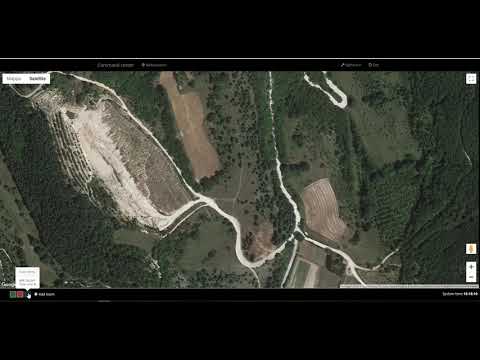 EchoOne: a short tutorial
 X-Tag realistic lasertag magazines (FRM system)
Frequently asked questions
Is X-Tag dangerous for the eyes?
The X-Fire emitter is a Class 1 laser. Use it as described in the manual and don’t modify the emitter or its optics. References to the safety tests are in the product documentation.
What's the difference between X-Tag and airsoft?
In airsoft a hit is a BB striking you; with X-Tag it is an infrared signal picked up by sensors. The kit fits compatible replicas, and how much installation work it takes depends on the model and the electronics you choose.
Is my replica compatible?
Almost always. For good zeroing, the outer barrel and the optics mount must be firmly fixed, with no play. You don’t need an expensive replica: send us the make and model and we’ll tell you how the kit can be fitted.
Do I need a license or authorization?
X-Tag uses radio components in the license-free 2.4 GHz band (short range devices, compliant with the EMC, Low Voltage and RoHS directives), which need no license in Italy. To play at a field or an event you still follow the organizer’s rules, for example those of the X-Tag League.
Does it work outdoors and in sunlight?
Yes, X-Tag is designed for outdoor play too. In strong sunlight the range is shorter than on a cloudy day or at night. The stated X-Fire range refers to the worst conditions, that is full sun. Weather and zeroing matter as well; follow the manual to use and protect your devices.
Does it go through bushes?
The beam passes through the gaps between branches and leaves, like the light of a torch: if you can see the target, even partly, you can hit it. If it is fully covered, you can’t.
Which batteries do I need?
It depends on the device. Headsets run on an 18650 battery, while the weapon kit uses a LiPo battery, 2S (7.4 V) recommended. Grenades, mines and X-Kit use replaceable CR123 batteries. Check your device’s manual before choosing a battery.
Can it be played indoors?
Yes, the system works at close range too. You can build scenarios with dedicated objectives and accessories: for example, an incendiary grenade can make a room off-limits for a while.